
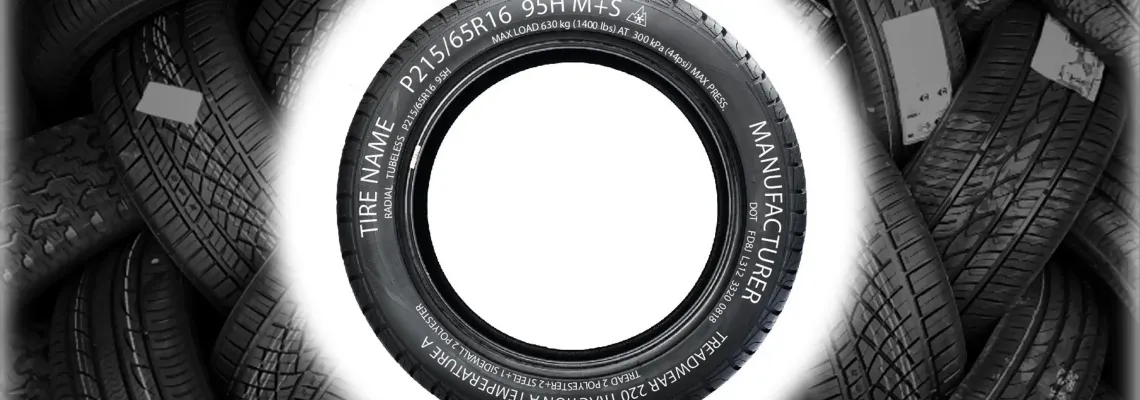
The markings on car tyres contain important information about their parameters and characteristics.
Here is a detailed explanation of the main markings:
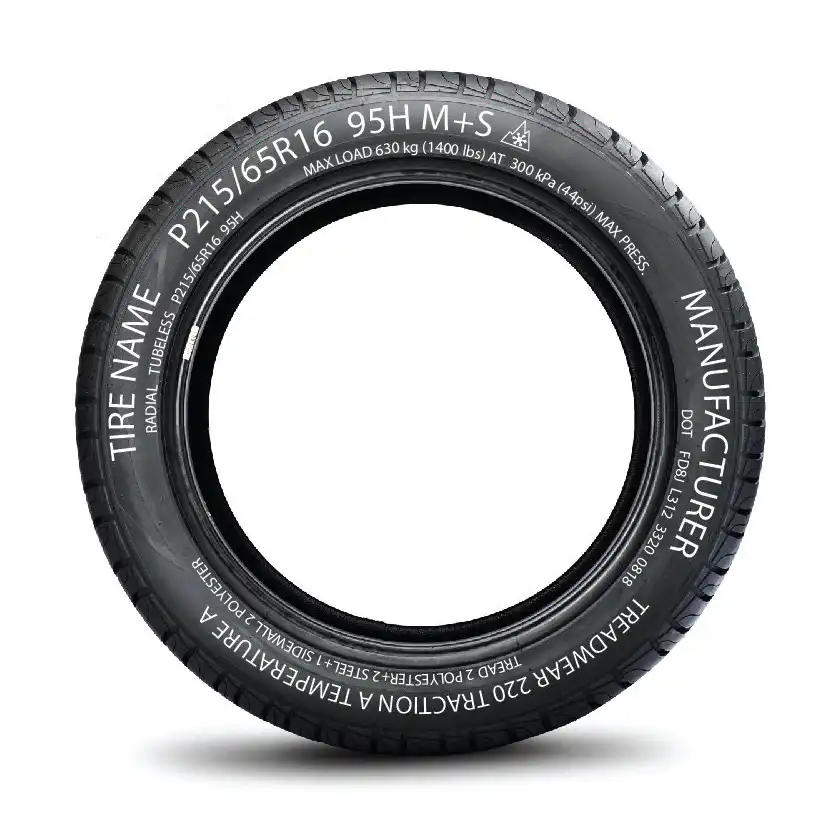
Example: P215/65R15 95H M+S
1. Optional attribute
- P : (Passanger)
- LT (Light Truck) : for vehicles that carry heavy loads, tow trailers or are looking for an extra heavy load option.
- ST (Special Trailer) : for travel trailers and boat trailers.
- T (Temporary) : spare tire.
2. Tire width (215)
- Width in millimetres (215 mm).
3. Section height (65)
- The ratio of height to width in percentage (65% of 215 mm = 140 mm).
- If this designation is missing (e.g. 215 R15), then it is a standard profile bias tyre.
4. Construction (R)
- R : Radial tyre, sometimes called belted (most common).
- D or - : Diagonal tyre (older technology, found almost exclusively on farm machinery and on old model cars and motorcycles).
- RF : RunFlat (tires that allow running to a repair shop after a puncture).
5. Rim diameter (15)
- Rim diameter (inside diameter of the tire) in inches/inches (15").
6. Load index (95)
- Maximum permissible load (95 = 690 kg).
- 0 (45 kg); 1 (46.2 kg); 2 (47.5 kg); 3 (48.7 kg); 4 (50 kg); 5 (51.5 kg); 6 (53 kg); 7 (54.5 kg); 8 (56 kg); 9 (58 kg); 10 (60 kg); 11 (61.5 kg); 12 (63 kg); 13 (65 kg); 14 (67 kg); 15 (69 kg); 16 (71 kg); 17 (73 kg); 18 (75 kg); 19 (77.5 kg); 20 (80 kg); 21 (82.5 kg); 22 (85 kg); 23 (87.5 kg); 24 (90 kg); 25 (92.5 kg); 26 (95 kg); 27 (97 kg); 28 (100 kg); 29 (103 kg); 30 (106 kg); 31 (109 kg); 32 (112 kg); 33 (115 kg); 34 (118 kg); 35 (121 kg); 36 (125 kg); 37 (128 kg); 38 (132 kg); 39 (136 kg); 40 (140 kg); 41 (145 kg); 42 (150 kg); 43 (155 kg); 44 (160 kg); 45 (165 kg); 46 (170 kg); 47 (175 kg); 48 (180 kg); 49 (185 kg); 50 (190 kg); 51 (195 kg); 52 (200 kg); 53 (206 kg); 54 (212 kg); 55 (218 kg); 56 (224 kg); 57 (230 kg); 58 (236 kg); 59 (243 kg); 60 (250 kg); 61 (257 kg); 62 (265 kg); 63 (272 kg); 64 (280 kg); 65 (290 kg); 66 (300 kg); 67 (307 kg); 68 (315 kg); 69 (325 kg); 70 (335 kg); 71 (345 kg); 72 (355 kg); 73 (365 kg); 74 (375 kg); 75 (387 kg); 76 (400 kg); 77 (412 kg); 78 (425 kg); 79 (437 kg); 80 (450 kg); 81 (462 kg); 82 (475 kg); 83 (487 kg); 84 (500 kg); 85 (515 kg); 86 (530 kg); 87 (545 kg); 88 (560 kg); 89 (580 kg); 90 (600 kg); 91 (615 kg); 92 (630 kg); 93 (650 kg); 94 (670 kg); 95 (690 kg); 96 (710 kg); 97 (730 kg); 98 (750 kg); 99 (775 kg); 100 (800 kg); 101 (825 kg); 102 (850 kg); 103 (875 kg); 104 (900 kg); 105 (925 kg); 106 (950 kg); 107 (975 kg); 108 (1000 kg); 109 (1030 kg); 110 (1060 kg); 111 (1090 kg); 112 (1120 kg); 113 (1150 kg); 114 (1180 kg); 115 (1215 kg); 116 (1250 kg); 117 (1285 kg); 118 (1320 kg); 119 (1360 kg); 120 (1400 kg); 121 (1450 kg); 122 (1500 kg); 123 (1550 kg); 124 (1600 kg); 125 (1650 kg); 126 (1700 kg); 127 (1750 kg); 128 (1800 kg); 129 (1850 kg); 130 (1900 kg); 131 (1950 kg); 132 (2000 kg); 133 (2060 kg); 134 (2120 kg); 135 (2180 kg); 136 (2240 kg); 137 (2300 kg); 138 (2360 kg); 139 (2430 kg); 140 (2500 kg); 141 (2575 kg); 142 (2650 kg); 143 (2725 kg); 144 (2800 kg); 145 (2900 kg); 146 (3000 kg); 147 (3075 kg); 148 (3150 kg); 149 (3250 kg); 150 (3350 kg); 151 (3450 kg); 152 (3550 kg); 153 (3650 kg); 154 (3750 kg); 155 (3875 kg); 156 (4000 kg); 157 (4125 kg); 158 (4250 kg); 159 (4375 kg); 160 (4500 kg); 161 (4625 kg); 162 (4750 kg); 163 (4875 kg); 164 (5000 kg); 165 (5150 kg); 166 (5300 kg); 167 (5450 kg); 168 (5600 kg); 169 (5800 kg); 170 (6000 kg); 171 (6150 kg); 172 (6300 kg); 173 (6500 kg); 174 (6700 kg); 175 (6900 kg); 176 (7100 kg); 177 (7300 kg); 178 (7500 kg); 179 (7750 kg); 180 (8000 kg); 181 (8250 kg); 182 (8500 kg); 183 (8750 kg); 184 (9000 kg); 185 (9250 kg); 186 (9500 kg); 187 (9750 kg); 188 (10000 kg); 189 (10300 kg); 190 (10600 kg); 191 (10900 kg); 192 (11200 kg); 193 (11500 kg); 194 (11800 kg); 195 (12150 kg); 196 (12500 kg); 197 (12850 kg); 198 (13200 kg); 199 (13600 kg);
7. Speed index (H)
- Maximum permissible speed (H = 210 km/h).
- A1 (5 km/h); A2 (10 km/h); A3 (15 km/h); A4 (20 km/h); A5 (25 km/h); A6 (30 km/h); A7 (35 km/h); A8 (40 km/h); B (50 km/h); C (60 km/h); D (65 km/h); E (70 km/h); F (80 km/h); G (90 km/h); J (100 km/h); K (110 km/h); L (120 km/h); M (130 km/h); N (140 km/h); P (150 km/h); Q (160 km/h); R (170 km/h); S (180 km/h); T (190 km/h); U (200 km/h); H (210 km/h); V (240 km/h); W (270 km/h); Y (300 km/h); ZR (> 240 km/h)
8. M+S (Mud & Snow)
- Indicates that, according to the manufacturer, these are snow tyres.
9. TL - Tubeless
- Indicates that the tire does not need an inner tube.
10. TT - Tube type
- Indicates a tubular tire designed to be mounted with an inner tube.
11. MAXLOAD and MAX PRESS
- Indicates the maximum load capacity and maximum pressure of the tire.
- The load and pressure values for your vehicle are usually found in the owner's manual or on the sticker on the driver's side door or on the fuel filler cap.
12. XL (Extra Load)
- A tyre with a higher load capacity / higher load index than standard models in a given size.
13. RF (Reinforced)
- Reinforced tyre with increased load capacity. The meaning is similar as in the case of XL tyres.
14. Rotation/Arrow
- Direction of rotation (if asymmetrical).
15. TWI (Tread Wear Indicator)
- Notes the location of the tire tread wear indicators. These are 1.6 mm high bars located between the grooves of the tread pattern. When the tread is worn to the level of the wear indicators, the tire has reached the minimum allowable tread depth .
- Driving with worn tread affects the handling, braking and stability of the vehicle and significantly increases safety risks.
- Worn tread does not shed water/snow effectively, resulting in reduced road grip, loss of steering control, extended braking distances and risk of skidding/skidding (e.g. 'aquaplaning': the tyre floats on the surface of the water and loses contact with the road).
- In Bulgaria, the minimum permissible tread depth is 1.6 mm, except between 15 November and 1 March, when cars must have tyres with a tread depth of at least 4 mm (whether winter, all-season or summer tyres).
16. DOT (Department of Transportation) markings
- A marking required by the U.S. Department of Transportation indicating that a tire meets safety standards.
- This code contains information on:
Manufacturer (factory and brand)
Tyre size and model
Date of manufacture (most important part)
- The DOT marking usually looks like this: DOT XXXX XXXX 3523
- The last four digits are the most important:
The first two digits are the week of manufacture (1 to 52)
The last two digits are the year of manufacture
- For example, 3523 → produced in the 35th week of 2023.
- Tyre age recommendations:
Up to 5 years: optimum for safe operation (after this period the tyre may have lost its optimum elasticity resulting in poorer grip)
5-6 years: require more frequent checks
Over 6-10 years: replacement strongly recommended (risk of cracks and reduced grip)